
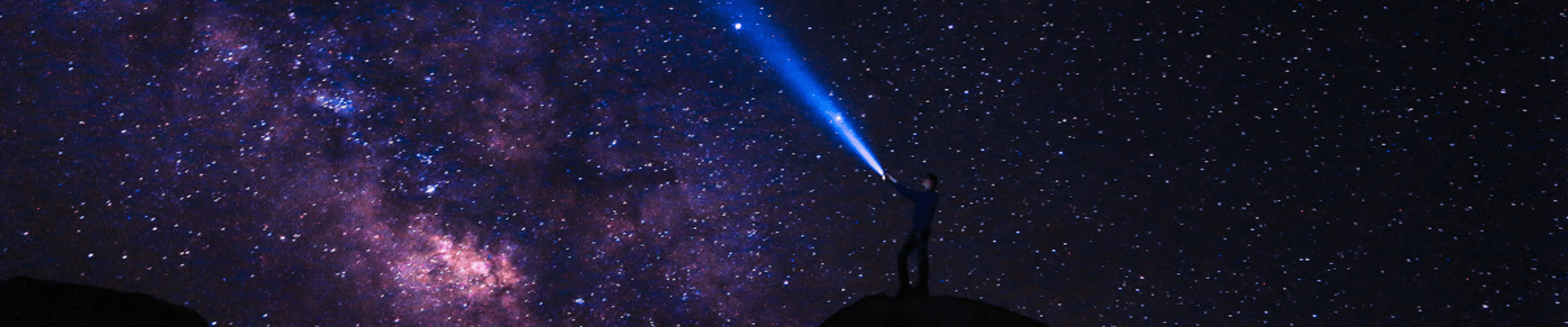

Children do not usually fall in love with science because someone asked them to memorise facts. They connect with it when something feels real. That is exactly how stargazing helps kids learn science naturally. A child who sees the Moon through a telescope, notices that it looks different on another night, or asks why one bright object does not twinkle like the others, is already stepping into real scientific thinking. Observation comes first. Curiosity follows. The learning grows from there. This is also closely aligned with how early science education frames sky learning: children use observations of the Sun, Moon, and stars to notice patterns that can be predicted. Explore Stargazing for Kids in Chennai here.
Kids remember what they actually see!
A diagram in a textbook can explain the Moon. But the first close view of the Moon through a telescope often does something much stronger: it makes the idea unforgettable.
That is why science learning through stargazing feels different from routine instruction. Instead of hearing that the Moon has craters, children see texture, shadow, and shape for themselves. Instead of vaguely knowing that planets exist, they realize those bright points are real worlds. When learning begins with a visible experience, it becomes easier for children to ask questions, connect ideas, and remember what they discovered later.
For many parents, this is the hidden strength of stargazing for kids in Chennai. It does not feel like pressure. It does not feel like homework. It feels like wonder. Yet that wonder quietly supports science.
Why the night sky turn abstract science into a real experience?
Children often hear words like orbit, phase, planet, star, gravity, and space long before those ideas feel meaningful. The night sky changes that. It gives them a real reference point.
When a child notices that the Moon is not always the same shape, science stops being abstract. When they compare one evening sky with another, they begin to understand that the sky is dynamic, not fixed. When they hear that the Moon follows a repeating cycle of phases over about 29.5 days, that pattern becomes easier to understand because they can connect it to something they have actually seen.
This is one reason educational astronomy for children works so well. It starts with the world above them, not with forced complexity. A child does not need advanced knowledge to begin. They only need a reason to look up.
The science skills stargazing quietly supports
Parents often ask how stargazing builds curiosity in children. The answer is that it develops the habits behind science, not just the facts.
First, it strengthens observation. Kids learn to slow down and notice details. They begin to compare brightness, colour, shape, movement, and position.
Second, it encourages questions. Why is the Moon bigger tonight? Why does one object look steady while another twinkles? Why can we see some things easily and not others?
Third, it builds comparison and pattern recognition. Children start noticing that the Moon changes in a sequence, that some objects appear in certain parts of the sky, and that skywatching rewards repeated attention.
Fourth, it teaches patience. Unlike screen-based entertainment, the sky does not rush to impress. Children learn to wait, focus, and appreciate gradual discovery.
These are small but powerful building blocks of scientific reasoning, and they sit naturally within observation-based science learning frameworks.
Why the Moon is often the best first teacher
If you want to make science exciting for kids, start with the Moon.
The Moon is bright, familiar, and easy for children to relate to. They have already seen it from balconies, terraces, school grounds, and car windows. That familiarity makes it the perfect bridge into science. The difference is that through guided observation, the Moon stops being “just the Moon” and becomes a place with shape, surface, phases, and predictable change.
NASA’s Moon learning resources for children and educators focus heavily on phases, repeated observation, and age-friendly explanation for a reason: the Moon is one of the easiest and most rewarding objects for beginners to track and understand. The eight main phases repeat in a regular cycle, which makes the Moon a natural teacher of patterns.
For a child, that first telescope view can trigger a surprisingly big shift: “I thought it was flat and glowing. I didn’t know it looked like that.” That one moment is enough to open the door to larger questions about the Earth, the Sun, and space itself.
Want to understand the rare Moon moment everyone talks about? Read our complete guide on Blue Moon 2026 in Chennai: meaning, science, myths and how to experience it.
How planets spark deeper space curiosity
After the Moon, planets often become the next big hook.
NASA’s skywatching guidance notes that Mercury, Venus, Mars, Jupiter, and Saturn can all be observed without a telescope at suitable times, and planets often shine more steadily than stars. That makes them especially useful for beginner skywatching conversations with children. Once a child learns that one bright object is Venus and another may be Jupiter, the sky starts to feel organized instead of random.
This is where a kids telescope learning experience becomes especially valuable. It helps children move from “that bright thing looks nice” to “that bright thing is a planet.” That is a major learning jump. Suddenly, science is not only about school chapters. It is about real objects they can point to.
It also creates lasting curiosity. Children who see Jupiter may ask about its moons. Children who hear about Saturn may want to know why it has rings. That is how space interest grows naturally in kids: one visible object leads to one question, then another, then another. NASA Space Place is built around exactly this style of child-friendly exploration, with simple explanations, activities, games, and visuals designed for young learners.
The parent angle: learning without making it feel like class
One of the biggest reasons parents love screen-free science experiences for children is that the learning feels gentle.
A good stargazing session does not ask a child to sit still and absorb a lecture. It gives them something to notice, react to, and talk about. That makes the experience emotionally positive, which matters more than many people realise. When a child enjoys the moment, they become more open to asking questions and remembering what they saw.
This is why how stargazing helps kids learn science is really also a parenting question. It offers a way to support curiosity, confidence, and attention without turning family time into an academic exercise. The child feels relaxed. The science still happens.
For families in Chennai, that can be especially meaningful. A terrace, an open evening sky, and a guided telescope session can become a rare mix of bonding and learning in the same experience.
One telescope view of the Moon can lead children to bigger questions: Why does Earth have only one Moon? Do all planets have moons? Which planet has the most? We answer these questions in our simple guide on how many moons each planet has.
The teacher and school angle: astronomy as experiential science
For educators, stargazing works because it makes science visible.
Children are not only told that patterns exist in nature. They observe them. They do not only hear that the Moon changes shape through the month. They can track it. They do not only read that objects in the sky behave differently. They begin noticing those differences themselves.
NASA/JPL’s Moon phases lesson for students is a good example of this educational logic: learners act out and understand the lunar cycle through observation and modelling rather than passive memorisation. Likewise, NASA’s standards-alignment material ties sky observation directly to age-appropriate science outcomes around noticing patterns and building models from evidence.
That makes astronomy a strong fit for experiential science, enrichment programs, STEM events, and curiosity-led school sessions. It is memorable because it connects the concept to something children can truly witness.
Learn how light pollution affects what you can see and discover the best dark-sky spots in India using the Bortle Scale
Age-friendly expectations matter
A child’s first stargazing experience should not try to do too much.
Very young children usually respond best to wonder, simple language, and one or two memorable objects. Primary-age children often enjoy comparisons, stories, and repeated questions. Older children may want more explanation about planets, motion, distance, and how telescopes work.
The goal is not to turn every session into a full astronomy lesson. The goal is to make the child want to come back to the sky again.
That is an important difference. Curiosity-based learning for children works best when adults do not overfill the moment. A short, successful session that leaves a child wanting more is far better than an overloaded session that feels tiring.
How to nurture the interest after the session
The best stargazing sessions do not end when the telescope is packed away.
You can keep the curiosity alive in simple ways:
- Track the Moon for a week and let the child describe how it changes.
- Ask them to draw what they remember seeing.
- Start a tiny sky journal with dates, sketches, and questions.
- Let them revisit one child-friendly space resource after the session instead of flooding them with information.
NASA Space Place and NASA Kids’ Club are especially useful follow-up resources because they are built specifically for children, with simple explanations, activities, games, and space-learning materials for different age groups.
This matters because children do not always show interest through formal study. Sometimes interest looks like one repeated question, one drawing of the Moon, or one request to look through the telescope again next month. That is still science growing.
From wonder to long-term curiosity
The real value of stargazing is not that it turns every child into an astronomer. It is that it helps them experience science as something alive, visible, and worth asking questions about.
That is how stargazing helps kids learn science naturally. It builds observation before explanation. It builds interest before pressure. It helps children feel that science is not somewhere far away in a difficult chapter. It is already above them.
And once a child feels that, curiosity has a much better chance of lasting.
For parents, teachers, and families looking for meaningful learning beyond screens and routine outings, stargazing offers something rare: a calm, memorable, joy-filled path into science.
FAQs on Kids Stargazing Learnings
How does stargazing help children learn science?
Stargazing helps children learn science by turning big ideas like Moon phases, planets, light, motion, and sky patterns into things they can actually observe. That makes science feel real, memorable, and easier to question.
Is stargazing good for kids?
Yes. It encourages observation, patience, curiosity, and question-led learning in a way that feels enjoyable rather than forced. Child-focused resources from NASA also support stargazing as an accessible entry point into space and Earth science learning.
What age is best for a child’s first stargazing experience?
There is no single perfect age. Young children can enjoy simple Moon viewing and sky stories, while older children may engage more with planets, patterns, and science explanations. The key is matching the experience to the child’s attention span and curiosity level.
Can children understand planets and the Moon through observation?
Yes. Observation is often the best starting point. Children may not understand every concept immediately, but seeing the Moon’s surface or learning to identify bright planets creates a strong foundation for later science learning.
Is stargazing a good screen-free learning activity for kids?
Yes. It is one of the most natural screen-free science experiences for children because it combines wonder, outdoor attention, conversation, and real observation in a single activity.

Turn Curiosity Into a Real Experience
Let your child see the Moon, planets, and night sky through a guided telescope session in Chennai. A calm, screen-free experience that builds real curiosity and lasting interest in science.
Leave a Reply