
The planets in our Solar System have very different numbers of moons. Mercury and Venus have no moons. Earth has one Moon. Mars has two moons. Jupiter has 115 known moons. Saturn has 292 known moons, making it the planet with the most recognized moons. Uranus has 29 known moons, and Neptune has 16 known moons. Pluto, now classified as a dwarf planet, has 5 known moons.
Moon counts can change over time as astronomers discover, confirm, and officially recognise new natural satellites. So, the safest way to describe these numbers is to call them “known moons” or “recognised moons.”
Why Are Moons So Fascinating?
When we look up at the night sky, the Moon feels familiar, emotional, and close to us. It lights up our evenings, changes shape through its phases, creates tides, and has inspired stories, calendars, festivals, poetry, science, and space missions.
But Earth’s Moon is only one member of a much larger family.
Across the Solar System, moons come in many forms. Some are tiny, irregular objects that may look like captured asteroids. Some are giant worlds bigger than planets like Mercury. Some are icy, some are volcanic, some may have underground oceans, and one of them even has a thick atmosphere and lakes of liquid methane.
That is why the question “how many moons do planets have?” is not just a number-based fact. It opens the door to understanding how planets formed, how gravity works, and why the outer Solar System is filled with some of the most mysterious worlds ever studied.
What is a Moon?
A moon is a naturally formed object that orbits a planet, dwarf planet, or even an asteroid. In scientific terms, moons are also called natural satellites or planetary satellites.
The word “satellite” simply means an object that moves around another larger object in space. Artificial satellites are made by humans, like communication or weather satellites. Natural satellites are formed by nature. Earth’s Moon is the most familiar example.
Moons do not all look like our Moon. Some are round because their gravity has shaped them into spheres. Others are small, uneven, potato-shaped worlds. Some orbit close to their planets, while others travel far away in tilted or unusual paths.
Planet-Wise Moon Count in the Solar System
Here is the current planet-wise moon count for the major planets, with Pluto included as a bonus dwarf planet because many people still search for it while learning about the Solar System.
| Planet | Number of Known Moons |
|---|
| Mercury | 0 |
| Venus | 0 |
| Earth | 1 |
| Mars | 2 |
| Jupiter | 115 |
| Saturn | 292 |
| Uranus | 29 |
| Neptune | 16 |
| Pluto (Dwarf Planet) | 5 |
This table gives a simple answer, but the real story becomes more interesting when we understand why some planets have no moons, while others have hundreds.
Why Do Mercury and Venus Have No Moons?
Mercury and Venus are the only two major planets in our Solar System with no known moons.
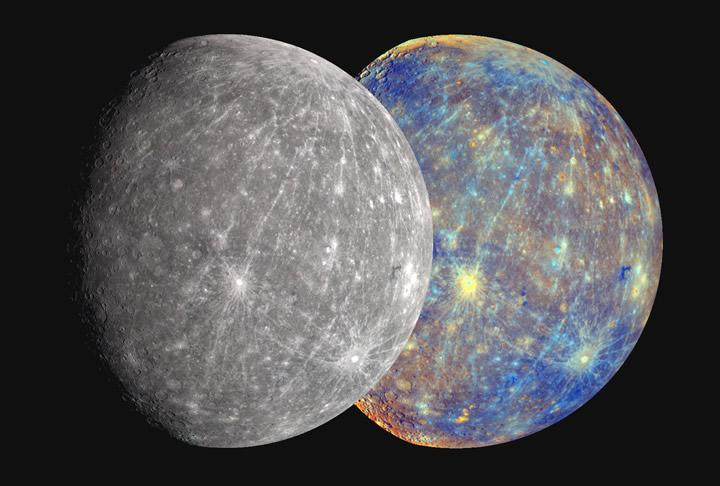
Mercury is very close to the Sun. Because of the Sun’s strong gravitational influence, it is difficult for a small planet like Mercury to hold on to a moon for a long time. Any small object orbiting Mercury could be disturbed by the Sun’s gravity, crash into Mercury, or escape into an orbit around the Sun.
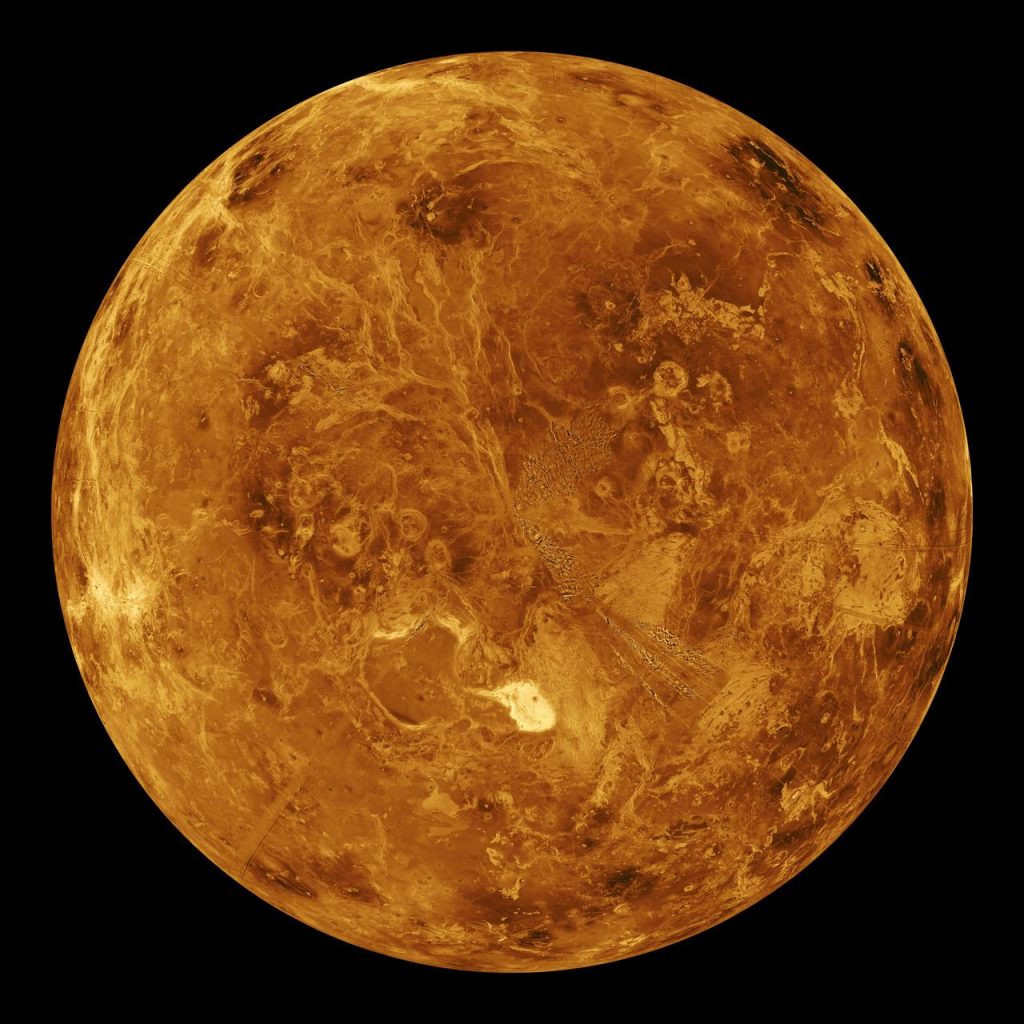
Venus is more mysterious. It is similar to Earth in size, but it has no moon. Scientists are still studying why. One possibility is that Venus may never have captured or formed a stable moon. Another possibility is that any moon it once had may have been lost due to gravitational interactions over time.
This makes Mercury and Venus important reminders that not every planet automatically gets a moon.
Earth: One Moon, but a Very Special One
Earth has one natural satellite: the Moon.
Compared to Earth, our Moon is unusually large. It is close enough to be easily visible with the naked eye and bright enough to dominate the night sky. It also plays an important role in Earth’s tides and helps stabilize Earth’s axial tilt over long periods.
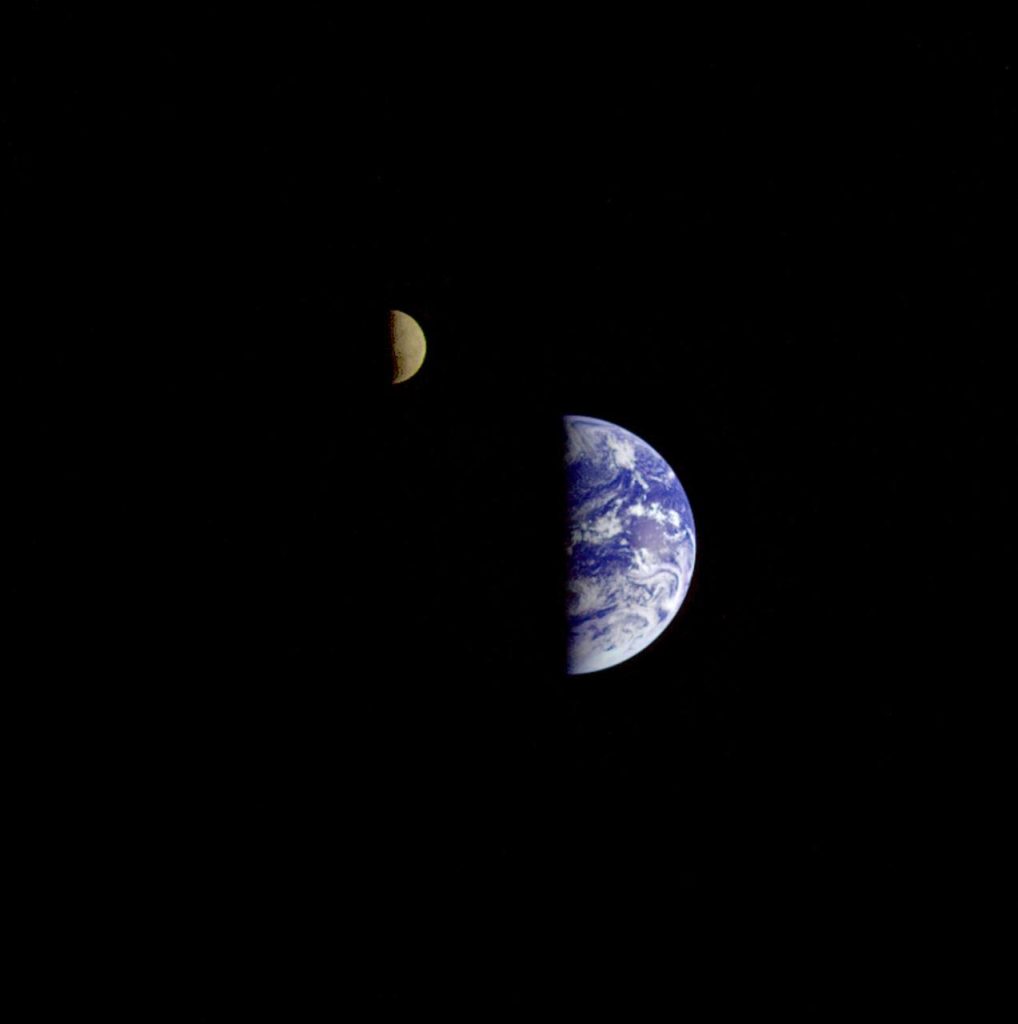
For beginners, Earth’s Moon is the best object to observe through a telescope. Its craters, mountains, plains, shadows, and changing phases make it one of the most beautiful and educational skywatching targets.
When children see the Moon through a telescope for the first time, they often realize that space is not just something from textbooks or movies. It is real, visible, and right above us.
Mars: The Red Planet with Two Tiny Moons
Mars has two moons: Phobos and Deimos.
Unlike Earth’s round and bright Moon, Mars’ moons are small, dark, and irregularly shaped. Their names come from Greek mythology and mean fear and panic. They are much smaller than our Moon and orbit close to Mars.
Phobos, the larger of the two, is slowly moving closer to Mars. In the distant future, it may either break apart and form a ring around Mars or crash into the planet. Deimos is smaller and farther away.
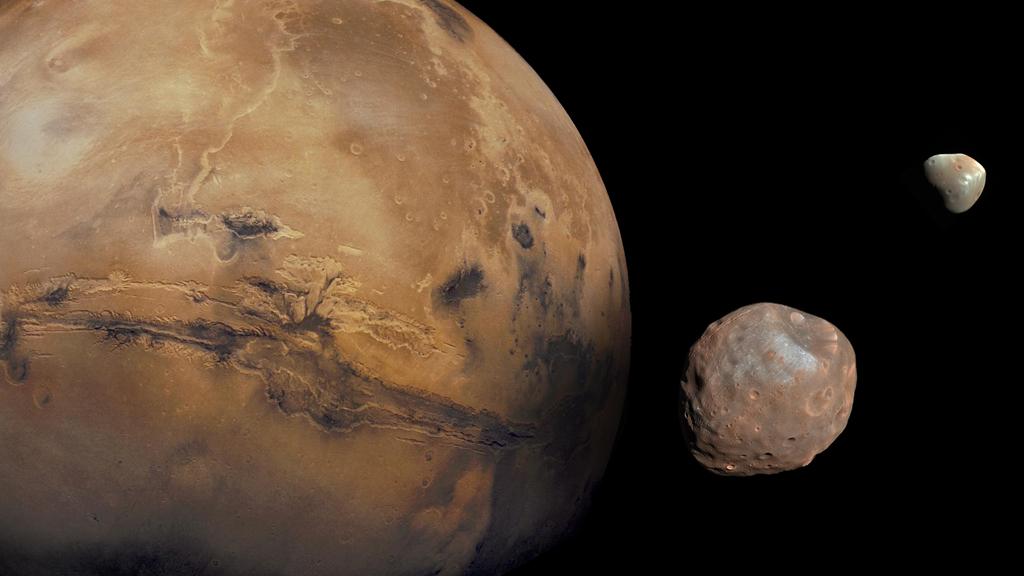
Mars’ two moons are not easy targets for small telescopes, but they are scientifically fascinating because they help us understand the history of the Martian system.
Jupiter: 115 Moons and Four Famous Telescope Targets
Jupiter has 115 known moons, making it one of the richest planetary systems in the Solar System.
The most famous moons of Jupiter are Io, Europa, Ganymede, and Callisto. These four are called the Galilean moons because Galileo Galilei observed them in 1610. His observations helped prove that not everything in the universe orbits Earth, which was a major turning point in the history of astronomy.
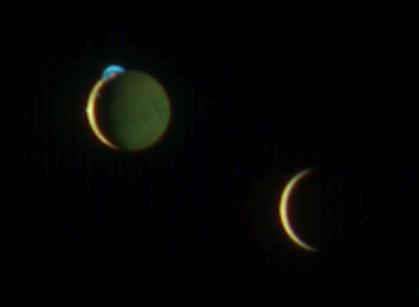
Each Galilean moon is special. Io is the most volcanically active world in the Solar System. Europa is covered with ice and is considered one of the most interesting places to search for a subsurface ocean. Ganymede is the largest moon in the Solar System and is even bigger than Mercury. Callisto is heavily cratered and preserves clues from the early Solar System.
For stargazing beginners, Jupiter is magical. Through binoculars or a telescope, Jupiter’s four major moons can appear like tiny points of light lined up around the planet. Watching them change position from night to night is one of the simplest ways to experience real orbital motion.
Saturn: 292 Moons and the Current Moon King
Saturn is famous for its rings, but its moons are just as impressive. With 292 known moons, Saturn currently has the highest number of recognized moons among the planets.
Many of Saturn’s moons are small, irregular objects, but some are major worlds with their own remarkable stories. Enceladus has attracted attention because of its icy surface and signs of activity. Mimas is known for its large crater that gives it a distinctive appearance. Iapetus has a strange two-toned surface. But the most famous of all is Titan.
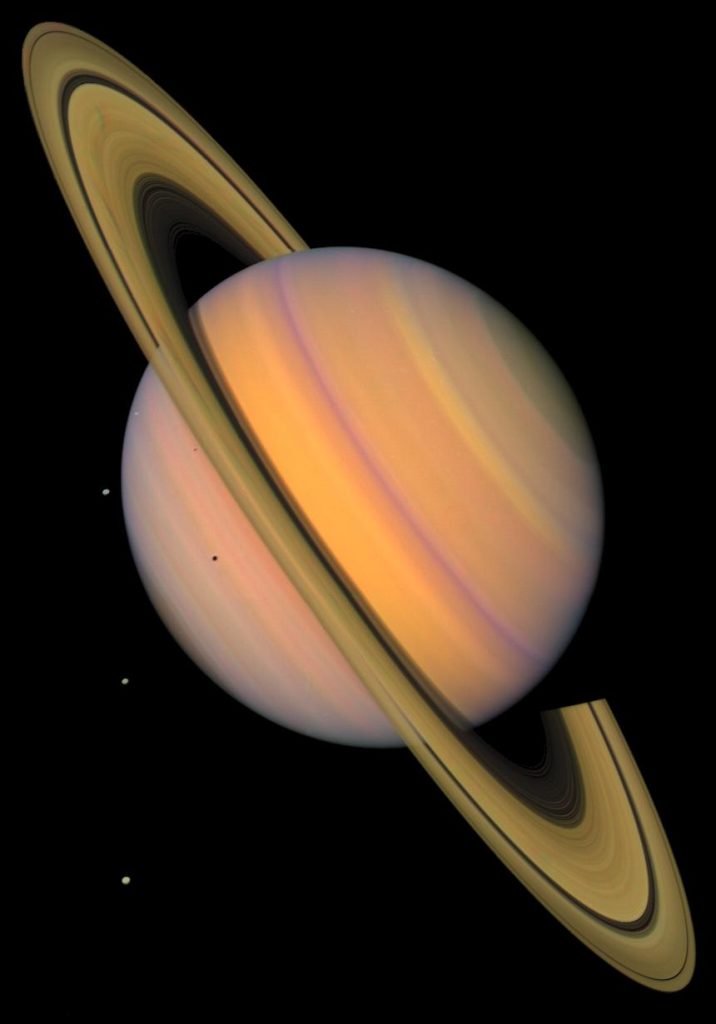
Saturn’s large number of moons is partly because giant planets have strong gravity and large regions of gravitational influence. They can hold on to many objects, including small irregular moons that may have been captured or formed from ancient collisions.
So yes, Saturn is not just the ring king. It is also the current moon king of the Solar System.
Titan: Saturn’s Biggest and Most Fascinating Moon
Titan is Saturn’s largest moon and one of the most interesting worlds in the Solar System.
It is larger than Earth’s Moon and even larger than the planet Mercury, though it is less massive. What makes Titan truly special is its thick atmosphere. Most moons have little or no atmosphere, but Titan has a dense, nitrogen-rich atmosphere that hides its surface beneath an orange haze.
Titan also has lakes, rivers, clouds, rain, and seas, but not made of water like on Earth. On Titan, the surface liquids are mainly methane and ethane because the temperature is extremely cold.
This makes Titan feel almost like a strange version of Earth, with weather and surface liquids, but under completely alien conditions. For students and astronomy beginners, Titan is a perfect example of why moons are not “small boring objects.” Some moons are complete worlds of their own.
Uranus: 29 Moons with Literary Names
Uranus has 29 known moons.
Unlike most moons in the Solar System, many of Uranus’ moons are named after characters from the works of William Shakespeare and Alexander Pope. Some well-known Uranian moons include Titania, Oberon, Ariel, Umbriel, and Miranda.
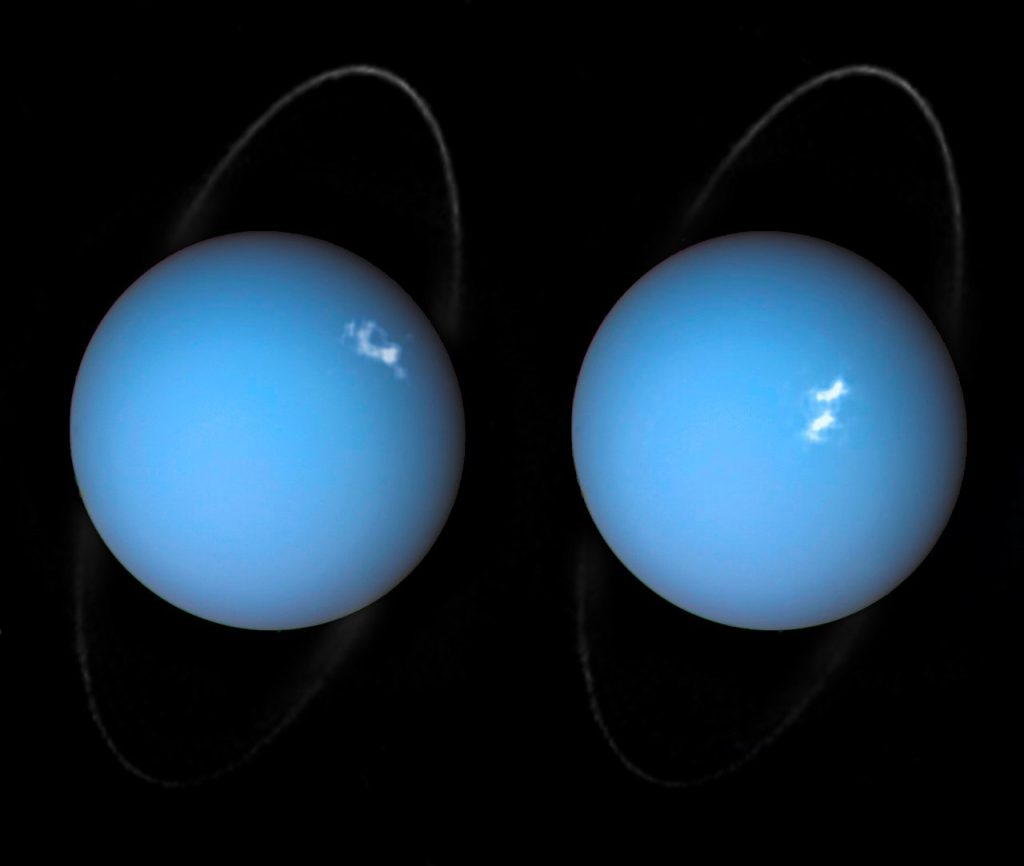
Uranus itself is unusual because it rotates almost sideways. Its moons orbit around this tilted planet, making the Uranian system one of the most unique in the Solar System. Although Uranus and its moons are not easy targets for casual telescope viewing from cities, they are important for understanding icy worlds and the outer planets.
Neptune: 16 Moons and the Mystery of Triton
Neptune has 16 known moons.
Its largest moon is Triton, a very unusual world. Triton orbits Neptune in the opposite direction of the planet’s rotation, which suggests that it may have been captured by Neptune’s gravity long ago. Triton is cold, icy, and geologically interesting.
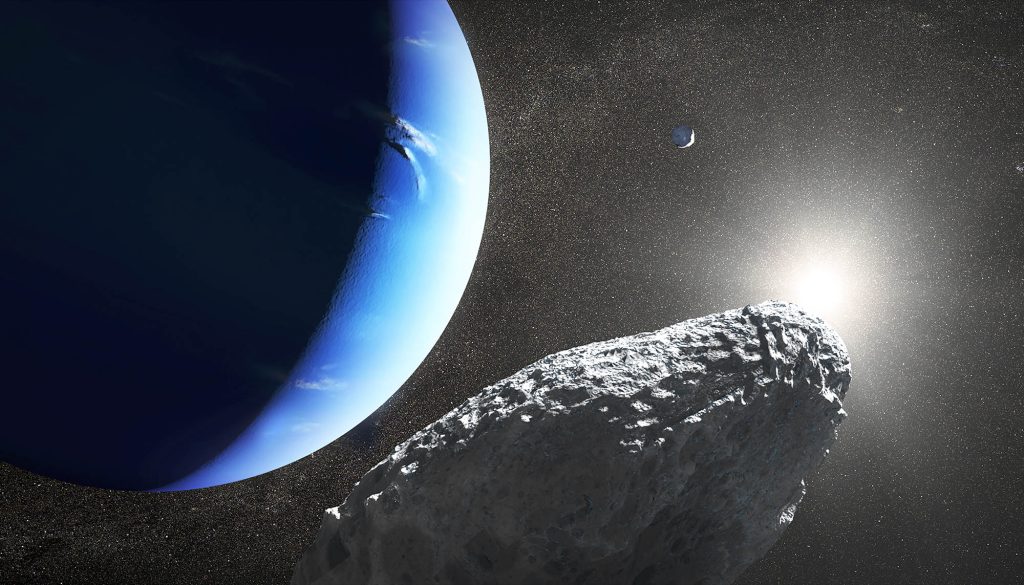
Neptune is very far from Earth, so its moons are not typical public stargazing targets. Still, Neptune’s moon system reminds us that the outer Solar System is full of distant, frozen worlds with complex histories.
Pluto: A Dwarf Planet with 5 Moons
Pluto is no longer classified as a major planet, but it remains one of the most loved objects in the Solar System. Pluto has 5 known moons: Charon, Nix, Hydra, Kerberos, and Styx.
Charon is especially interesting because it is very large compared to Pluto. In fact, Pluto and Charon are sometimes described as a double dwarf planet system because they orbit a common center of mass outside Pluto.
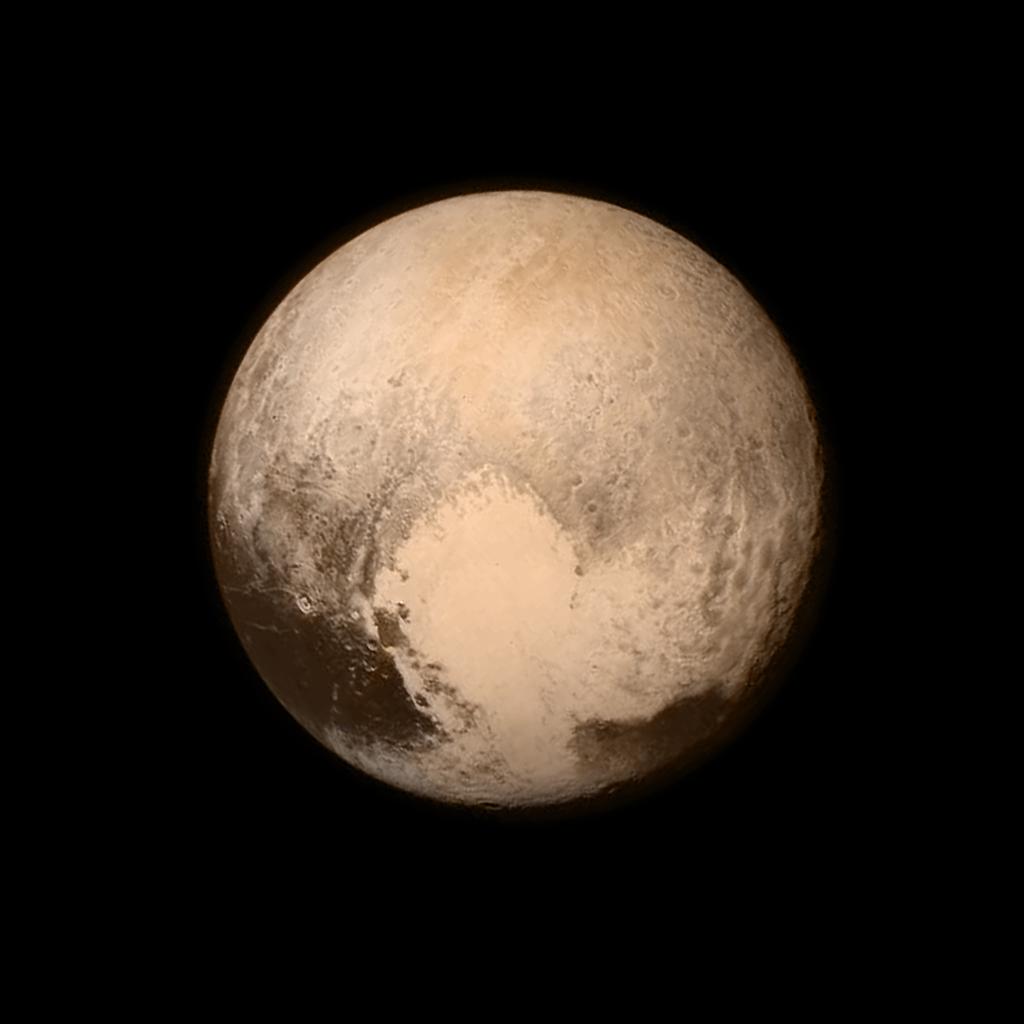
Including Pluto in this guide helps beginners understand that moons are not limited to the eight major planets. Dwarf planets, asteroids, and distant icy objects can also have moons.
Why Do Giant Planets Have So Many Moons?
The outer planets — Jupiter, Saturn, Uranus, and Neptune — have many more moons than the inner planets. The main reason is gravity.
Giant planets are massive and have large gravitational zones where they can hold natural satellites. They also formed in the outer Solar System, where there was more icy material available during the early formation of planets and moons.
Some moons may have formed along with their planet. Others may have been captured later. Some may be fragments from collisions. Over billions of years, these processes created complex moon systems around the giant planets.
This is why the planet-wise moon count is so uneven. The inner rocky planets have 0, 1, or 2 moons. The outer giant planets have dozens or hundreds.
Wondering why only a few stars are visible from Chennai while the Milky Way shines brightly from remote locations? Explore our complete Bortle Scale guide and India’s best dark-sky spots to understand how light pollution changes the night sky.
Can We See Planetary Moons Through a Telescope in Chennai?
Yes, some planetary moons can be seen from Earth, and Jupiter’s Galilean moons are the best example.
From Chennai, when Jupiter is visible and the sky is reasonably clear, a telescope can show Jupiter as a bright disk with its major moons nearby. They look like tiny stars arranged around the planet. Their positions change every night because they are constantly orbiting Jupiter.
Earth’s Moon is, of course, the easiest and most detailed moon to observe. Through a telescope, its craters and shadows look stunning, especially near the first quarter or last quarter phase.
Saturn’s Titan may be visible through telescopes under good conditions, but it is much more challenging than Jupiter’s four major moons. Urban light pollution, humidity, clouds, and atmospheric stability can affect visibility.
That is why guided stargazing is valuable. A telescope can show the object, but a good explanation turns the view into a memorable learning experience.
Final Thought: Earth’s Moon Is Just the Beginning
We may have only one Moon, but our Solar System is filled with hundreds of known moons. Some are tiny. Some are giant. Some are icy. Some may hide oceans. Some have volcanoes. Some have atmospheres. Some may even hold clues about the conditions needed for life.
From Earth’s familiar Moon to Saturn’s 292 known moons, every natural satellite has a story to tell.
The next time you look at the Moon, remember this: it is not alone. It is part of a much larger cosmic family orbiting planets, dwarf planets, and distant worlds across the Solar System.
Want your kids, family, or students to experience the Moon, planets, and real telescope views from Chennai? Book a guided stargazing session with Stargazing Chennai and turn the night sky into a live science classroom.
FAQs About Moons in the Solar System
How many moons are there in the Solar System?
There are 455 known moons orbiting the eight major planets in the Solar System. If Pluto’s 5 moons are also included, the total becomes 460 known moons. These numbers can change when new moons are discovered, confirmed, and officially recognized.
Which planet has the most moons?
Saturn currently has the most known moons in the Solar System, with 292 recognized moons. This makes Saturn the current moon king among the planets. Its moon count has increased over time as astronomers discovered and officially recognized many small, distant moons around the planet.
Which planets have no moons?
Mercury and Venus have no known moons. They are the only two major planets in the Solar System without natural satellites.
What is Saturn’s biggest moon?
Saturn’s biggest moon is Titan. Titan is also the second-largest moon in the Solar System and is famous for having a thick atmosphere and lakes, rivers, and seas of liquid methane and ethane.
Can Jupiter’s moons be seen from Earth?
Yes. Jupiter’s four largest moons — Io, Europa, Ganymede, and Callisto — can be seen from Earth with binoculars or a telescope when Jupiter is visible and sky conditions are good.
Which moon is bigger than planet Mercury?
Ganymede, Jupiter’s largest moon, is bigger than the planet Mercury. Titan, Saturn’s largest moon, is also larger than Mercury, although Ganymede is the largest moon in the Solar System.
Leave a Reply